
By Dr Hope Iyamu
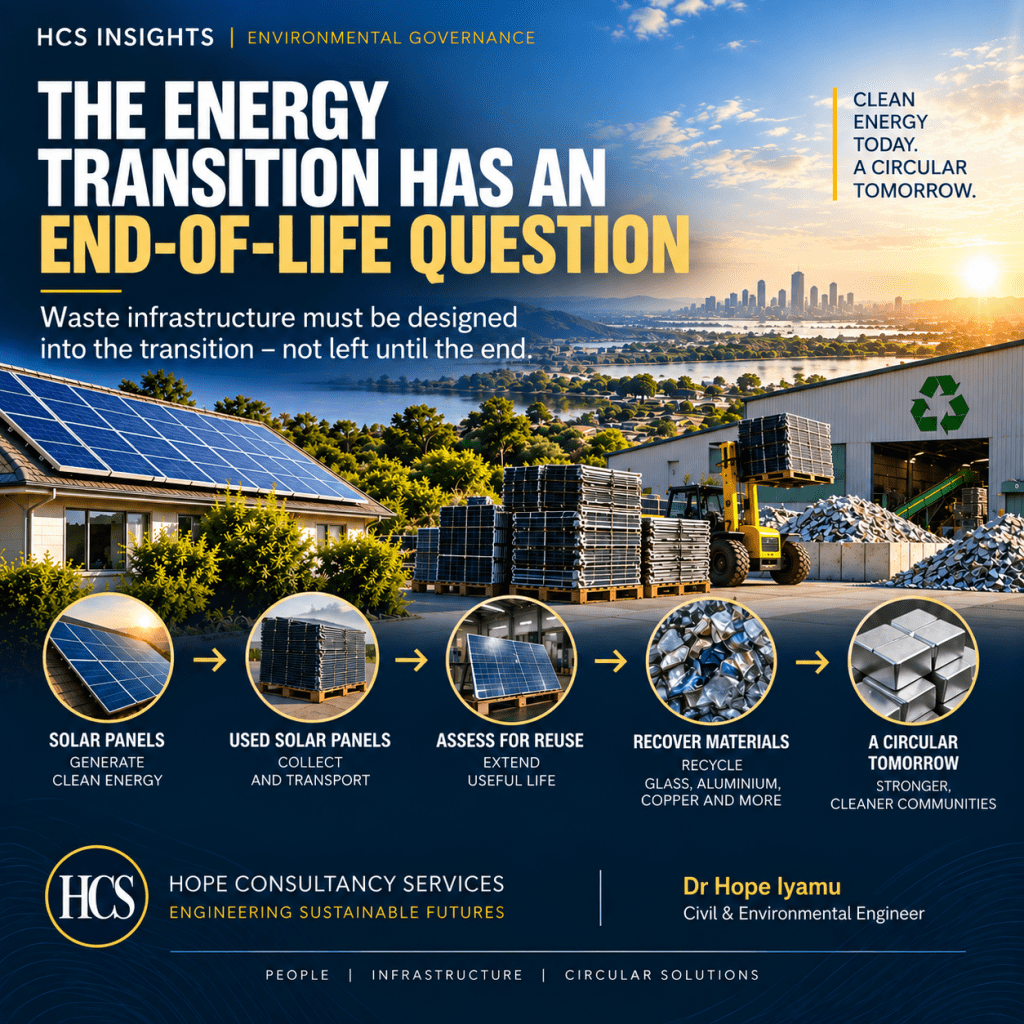
Figure 1: Solar Panel End-of-Life Pathway in the Energy Transition
Conceptual HCS visual illustrating the transition from solar-energy generation through end-of-life collection, reuse assessment and material recovery.
Australia's energy transition is accelerating.
Solar panels continue appearing on rooftops, farms and commercial buildings across the country. Every installation represents cleaner electricity today.
But every panel also has a future end-of-life pathway.
A recent development exposed why that pathway deserves far more attention.
Australia's $24.7 million National Solar Panel Recycling Pilot has reportedly remained on hold following a procurement complaint, with recycling businesses calling for the program to restart. The delay has created uncertainty for an industry preparing to expand collection networks, recycling capacity and investment.
At the same time, Western Australia is moving ahead with its own $13 million Remade in WA initiative, examining collection logistics, refurbishment opportunities, recycling infrastructure, regulatory barriers and industry scalability.
Taken together, these developments reveal a much larger engineering question.
Have we designed the waste infrastructure for the energy transition with the same determination that we designed the energy transition itself?
That distinction matters.
Because renewable-energy success should not end when electricity is generated. It should extend through the entire lifecycle of the product.
The Waste Infrastructure Question
Australia expects approximately one million tonnes — roughly 50 million solar panels — to reach end-of-life by 2035.
That future waste stream is not simply a recycling problem.
It is a systems-design problem.
The Commonwealth has already identified several barriers:
- high collection costs;
- transport costs;
- limited processing capacity; and
- uncertainty around scalable recovery systems.
For regional Western Australia, those barriers become even more significant.
A discarded panel in Perth and one in the Pilbara may contain essentially the same recoverable glass, aluminium and copper.
Their recovery economics, however, can be completely different.
Distance changes everything.
Recycling Begins Long Before the Recycling Plant
One of the most valuable features of the national pilot was not simply that it intended to recycle panels.
It intended to generate real-world evidence about collection and transport costs through approximately 100 collection sites.
That evidence matters because effective recovery depends on much more than a processing facility.
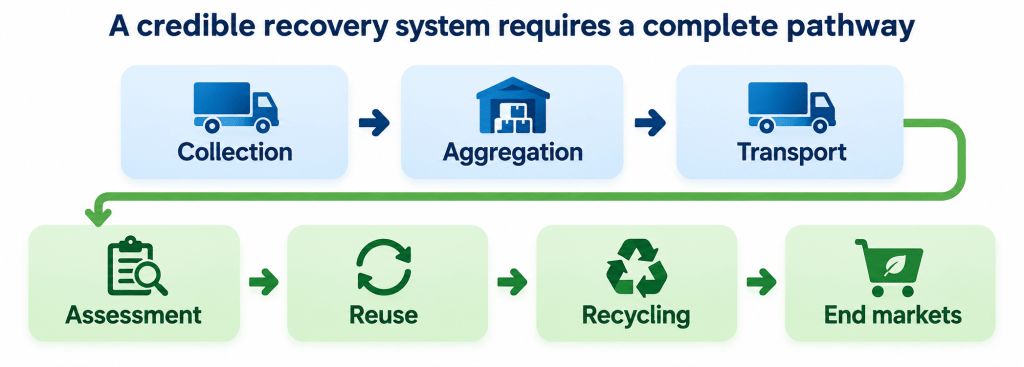
Figure 2: End-of-Life Collection and Recovery Pathway for Solar Panels
If one link becomes economically or technically unviable, the entire system weakens.
That is particularly true across regional Western Australia.
What Other Countries Already Do
Western Australia does not need to copy another country's model.
But it can learn from systems that have already begun addressing end-of-life responsibility.
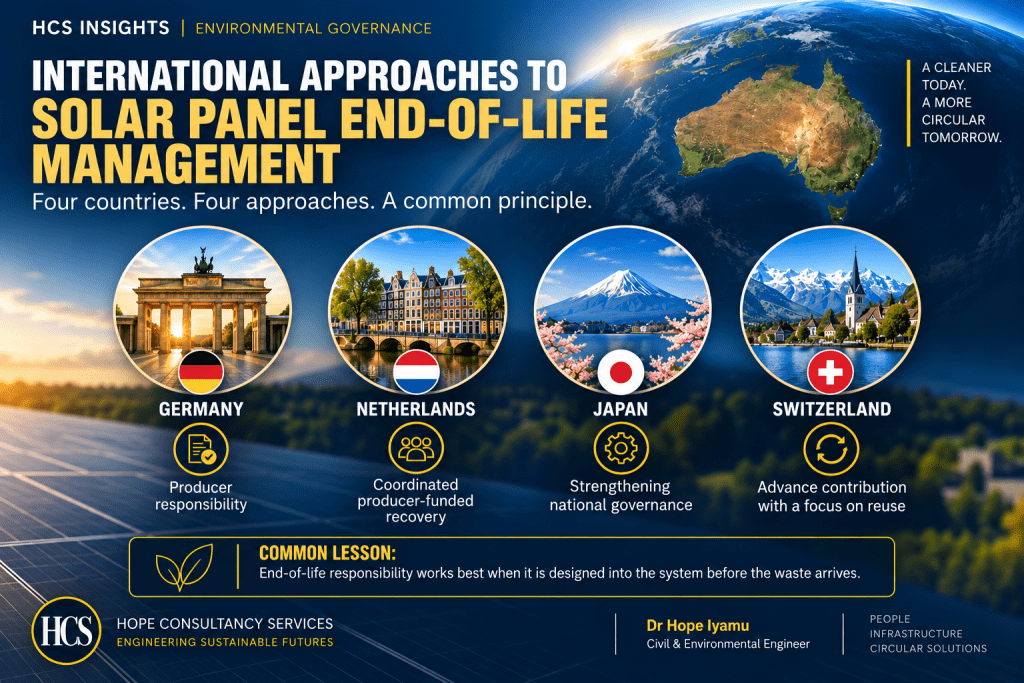
Figure 3: International Approaches to Solar Panel End-of-Life Management
HCS conceptual comparison of selected international approaches to solar-panel end-of-life responsibility and recovery.
Germany
Germany treats solar panels as electronic equipment under the EU's WEEE framework.
Manufacturers must register products, provide financial guarantees and participate in collection, logistics and recycling systems. The framework also establishes minimum recovery and recycling targets, helping ensure responsibility is designed into the product lifecycle rather than left entirely to local government.
The Netherlands
The Netherlands operates through Stichting OPEN, an extended producer responsibility organisation that coordinates collection and recycling.
Importantly, Dutch policymakers openly acknowledge that today's dominant recycling pathways still recover materials imperfectly and that higher-value recovery technologies require continued investment.
That is an important lesson.
Good governance is not pretending the system is finished. It is continuously improving it.
Japan
Japan has historically managed end-of-life panels under broader waste legislation.
Japan has progressively developed national recycling guidelines and advanced recovery technologies and, in 2026, enacted dedicated legislation to promote the recycling and resource recovery of photovoltaic waste. The approach reflects a deliberate effort to strengthen the national system before end-of-life volumes increase substantially from the late 2030s.
Rather than waiting for waste volumes to overwhelm the system, Japan has been strengthening governance before the largest retirement wave arrives.
Switzerland
Switzerland's approach centres on SENS eRecycling, funded through an advance recycling contribution paid when products enter the market.
The Swiss PV Circle initiative goes further by asking another important question before recycling begins:
Can this panel be reused?
That shift matters.
Reuse often preserves more value than recycling.
The Lesson for Western Australia
The comparison reveals a consistent pattern.
The strongest systems do not begin with the recycling plant. They begin with responsibility.
Collection is funded.
Logistics are planned.
Producers participate.
Reuse is considered.
Recycling becomes part of the product's lifecycle rather than an afterthought.
That is the principle Western Australia should examine as its own framework develops.
Who Should Carry End-of-Life Responsibility?
This may become the most important governance question of all.
Should local governments and waste generators carry most of the future cost?
Or should manufacturers, importers and suppliers participate through a properly designed extended producer responsibility system?
Western Australia's Containers for Change scheme provides a useful conceptual comparison.
It does not simply fund recycling. It supports collection, logistics and processing through a structured product-stewardship framework.
Solar panels require a different technical model. But the underlying principle remains relevant.
Circularity becomes considerably more credible when end-of-life responsibility is designed into the economics of the product itself.
The Cost of Waiting
If Australia delays building a coordinated end-of-life system, several risks become increasingly likely:
- growing stockpiles of retired panels;
- higher costs for regional communities;
- reduced investor confidence in recycling infrastructure;
- lost opportunities for refurbishment and reuse;
- pressure on local governments; and
- delayed development of valuable secondary-material markets.
These are not simply waste-management risks.
They are infrastructure-planning risks.
The longer end-of-life infrastructure is deferred, the greater the risk that tomorrow's waste volumes arrive before the collection, logistics, processing capacity and markets needed to manage them are ready.
The HCS Perspective
The energy transition should be evaluated across its full lifecycle.
Not simply by:
- megawatts installed,
- emissions avoided, or
- rooftop adoption rates.
But also, by:
- how products are collected,
- how materials are recovered,
- who carries responsibility,
- how regional logistics function, and
- whether recovered resources genuinely re-enter productive use.
That is where engineering, governance and circular-economy thinking converge.
Looking Forward
Western Australia's current baseline assessment creates an opportunity.
Not merely to build another recycling program. But to build an integrated recovery system.
One that recognises geography.
One that strengthens regional infrastructure.
One that encourages producer responsibility.
And one that treats end-of-life planning as part of renewable-energy design rather than its final chapter.
Because the energy transition does not finish when a solar panel begins producing electricity. It finishes when that panel completes its lifecycle responsibly.
That is the infrastructure question that deserves attention now.
Further Reading
- Australian Government — National Solar Panel Recycling Pilot.
- DWER — Remade in WA solar-panel recovery program.
- IEA PVPS Task 12 — Status of PV Module Recycling in Participating Countries.
- Germany — WEEE / ElektroG framework for photovoltaic modules.
- Netherlands — Stichting OPEN and PV circularity roadmap.
- Japan — Solar-panel recycling legislation and national guidelines.
- Switzerland — SENS eRecycling and Swiss PV Circle.
About the Author
Dr Hope Iyamu is a Civil & Environmental Engineer, consultant and educator. Through HCS Insights, he examines environmental governance, resource recovery, infrastructure sustainability and the engineering decisions that shape practical, defensible outcomes for communities and organisations.